The cost of a German Rottweiler puppy can vary significantly depending on breeding standards, health testing, temperament development, pedigree quality, and the overall quality of the breeding program. While many families begin by searching for Rottweiler puppy pricing or German Rottweiler puppies for sale, understanding what goes into producing a stable, well-structured Rottweiler is far more important than focusing on a number alone.
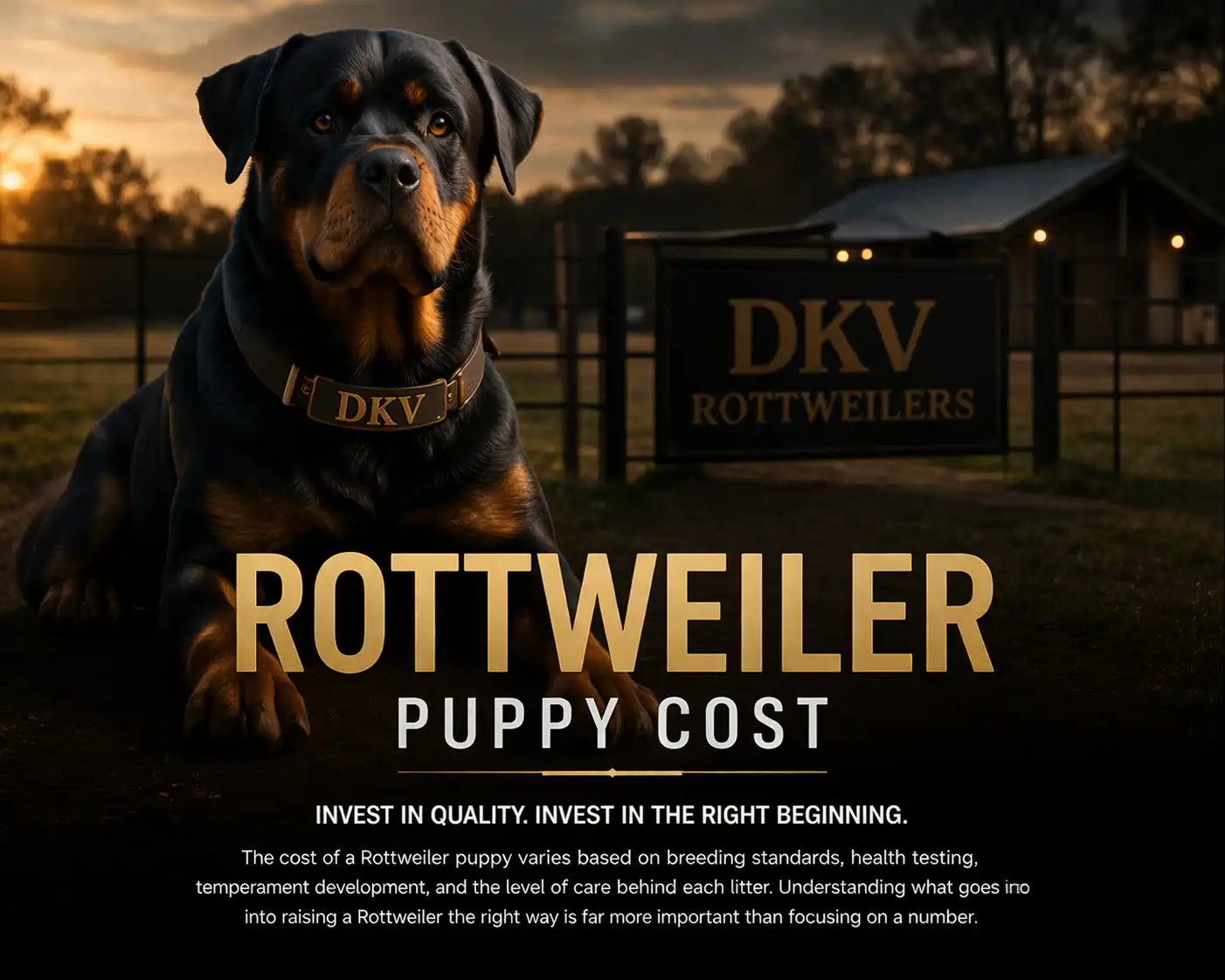
The cost of a German Rottweiler puppy can vary significantly depending on the breeder, bloodlines, health testing, and overall quality of the breeding program. While some Rottweiler puppies may be advertised at lower prices, those differences often reflect gaps in health testing, breeding practices, and early development. When evaluating the cost of a Rottweiler, it is important to look beyond the initial purchase price and understand what is included, how the Rottweiler breeding program operates, and how Rottweiler puppies for sale are responsibly placed.
The cost of a Rottweiler puppy is directly tied to the level of care, planning, structure, and responsibility within the breeding program. Reputable German Rottweiler breeders invest significantly in producing stable, well-structured dogs with predictable temperament and long-term health through a disciplined breeding process. 👉 Learn more about how the program operates
Not all Rottweiler puppies are produced under the same standards. Lower-cost Rottweilers are often the result of programs that prioritize volume over structure, temperament, and long-term health. In contrast, a well-bred Rottweiler represents a long-term investment in stability, predictability, and proper development.
Families who understand these differences often take time to evaluate the breeder, review the Rottweiler education library, and learn what defines responsible breeding before making a decision. 👉 Explore Rottweiler education resources
When evaluating Rottweiler puppy cost, it is important to consider everything included within the breeding program. A reputable German Rottweiler breeder provides far more than just a puppy, focusing instead on proper placement, long-term success, and ongoing breeder support. 👉 View everything included with a DKV Rottweiler puppy
Beyond the initial purchase price of a Rottweiler puppy, ownership includes ongoing responsibilities such as training, nutrition, veterinary care, and long-term maintenance. Understanding the full cost of owning a Rottweiler helps ensure families are properly prepared for the commitment.
Serious families often begin by reviewing expectations, lifestyle requirements, and preparation guidelines before moving forward. 👉 Learn how to prepare for a Rottweiler
Families searching for Rottweiler puppy cost often begin with pricing, but experienced Rottweiler families quickly discover that the breeder and breeding program matter far more than the purchase price. A properly bred German Rottweiler provides long-term stability, predictability, and confidence that cannot be measured by cost alone.
These decisions are supported through structured evaluation, not impulse purchasing, ensuring each placement is intentional and well-matched. 👉 Understand the DKV Buyer Readiness Experience
For families seriously considering a German Rottweiler puppy, cost is only one part of the decision. The next step is to evaluate readiness, expectations, and alignment with the DKV Rottweilers breeding program through the DKV Buyer Readiness Experience, ensuring the right long-term fit for both the family and the Rottweiler puppy.