DKV Rottweilers shares practical Rottweiler training tips developed through more than 30 years of hands-on experience raising, breeding, training, and showing Rottweilers. From early Rottweiler puppy training and obedience to socialization, handling, grooming, and everyday manners, these videos demonstrate simple techniques that help build communication, confidence, and a strong relationship between a Rottweiler and its family.
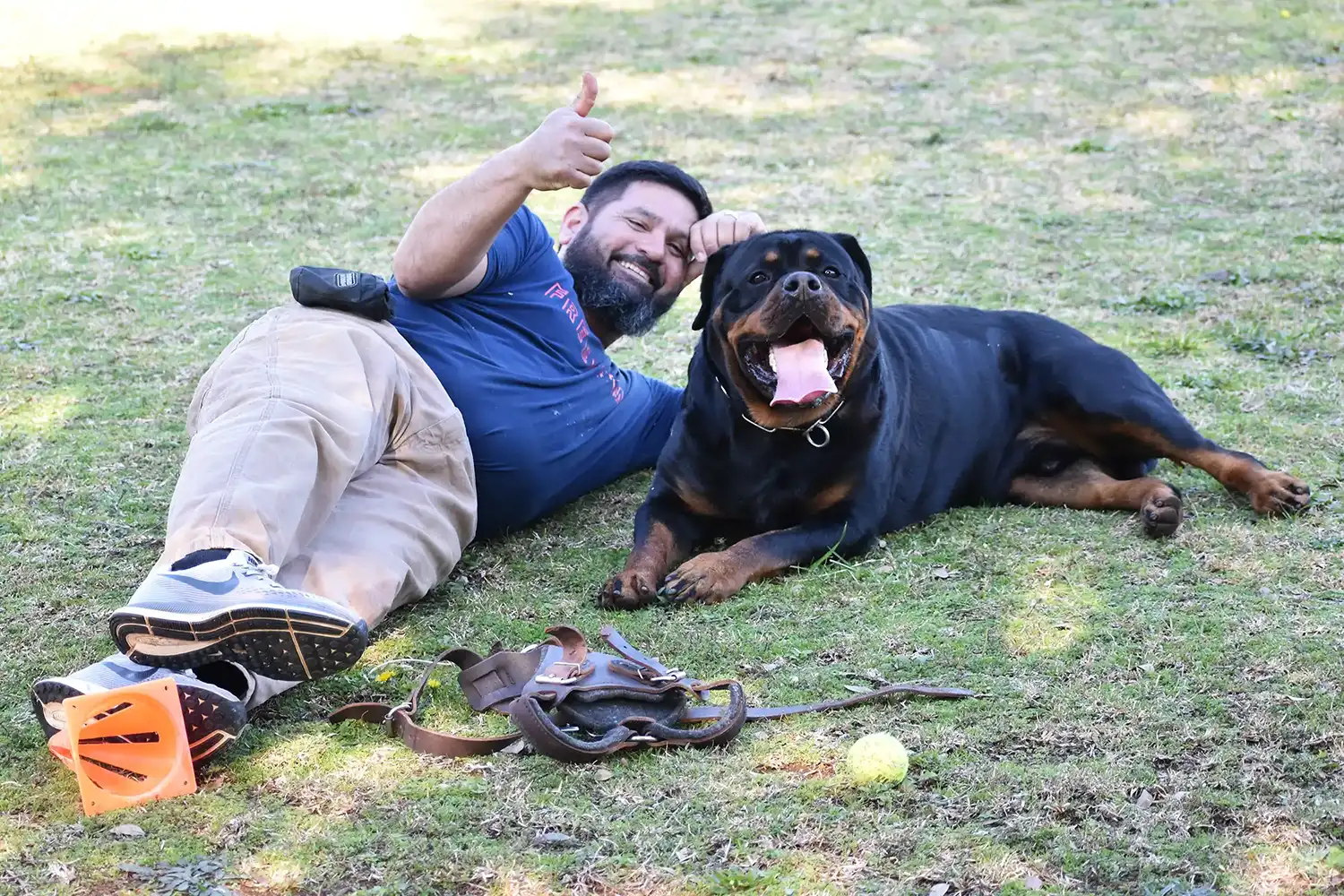
Training a Rottweiler puppy begins long before formal obedience commands. From the first days at home, a puppy is learning through everyday interactions, routines, boundaries, handling, play, and communication. Simple moments can begin teaching focus, engagement, confidence, patience, and appropriate behavior without turning every interaction into a formal training session.
Rottweilers are intelligent, observant dogs that learn quickly, which makes consistency especially important. At DKV Rottweilers, we believe many of the habits that shape a well-mannered adult begin with small lessons introduced while the puppy is young. Early Rottweiler training should focus not only on commands, but also on developing trust, communication, confidence, and an understanding of what is expected.
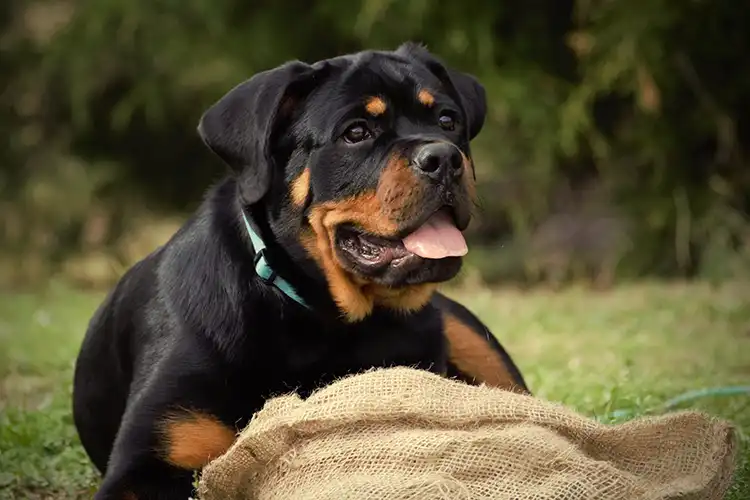
Watch real Rottweiler training demonstrations from DKV Rottweilers and learn the purpose behind each exercise. These training tips use DKV puppies and adult Rottweilers to demonstrate practical techniques owners can incorporate into everyday life.
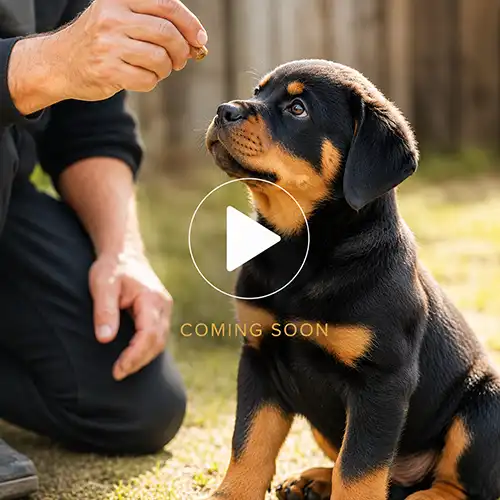
Start training your Rottweiler puppy as soon as they come home. Use whatever naturally gets your puppy’s attention and keep early training sessions short—about 5 to 10 minutes maximum. A young puppy has a short attention span, so the goal is not perfect obedience. Keep training simple, positive, and fun so your puppy learns to enjoy working with you.
Remember that training isn't only about correcting mistakes. Praise your puppy when they get it right. Rewarding a job well done helps build confidence, engagement, and a positive association with obedience training.
DKV TRAINING TIP: Soft treats work especially well with young puppies. Break off only a tiny piece as you continue moving so the puppy can quickly eat the reward without stopping the training session to chew.
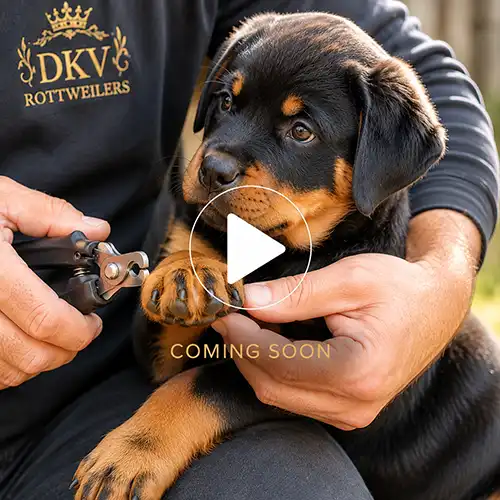
Get your Rottweiler puppy accustomed to being touched and groomed while they are young. Regularly handle their paws, ears, mouth, and body, and introduce brushing, bathing, and nail trimming as normal parts of life. Keep these early sessions short, calm, and positive so grooming becomes something your puppy is comfortable with and can even enjoy.
Remember, it is much easier to teach a young puppy to calmly accept grooming and handling than to introduce these experiences for the first time to a 120-pound adult Rottweiler. Start young, take your time, and build cooperation gradually.
DKV TRAINING TIP: If your puppy doesn't like having their nails trimmed, don't turn it into a battle. Set a small goal of trimming one nail per day. Keep the experience calm and avoid making nail trimming traumatic.
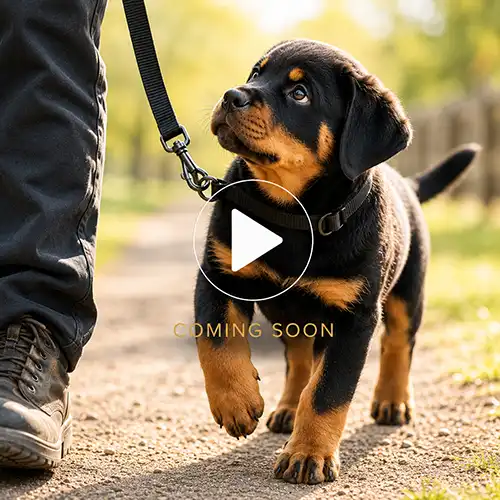
Some puppies will freeze or become unsure the first time they feel a leash attached to their collar. Start leash training while your Rottweiler puppy is young, keep the lessons short, and give them time to understand that the leash is nothing to fear. Encourage your puppy to walk with you and reward them when they follow your direction.
Keep early leash training simple and positive. The goal isn't a perfect heel—it is getting the puppy comfortable with the leash, following your movement, and enjoying the experience.
DKV TRAINING TIP: In a safe, supervised area, let your puppy move freely with a lightweight leash attached to their collar. This helps them get accustomed to the extra weight and movement of the leash before you begin asking them to walk with you.
Yes. Rottweilers are highly intelligent, attentive dogs and are generally very receptive to training when communication is clear and consistent. They tend to learn quickly, but their intelligence also means they learn unwanted habits just as easily as good ones. Early training, consistency, appropriate boundaries, and regular interaction are especially important as a Rottweiler puppy develops into a powerful adult dog.
Training can begin as soon as a Rottweiler puppy comes home. Young puppies are already learning from their environment, routines, boundaries, and interactions with people. Early Rottweiler puppy training should be simple and positive, focusing on engagement, name recognition, handling, following, basic manners, and introductory obedience rather than expecting long or highly structured training sessions.
Young Rottweiler puppies generally benefit more from several short training opportunities throughout the day than from one long session. Even a few minutes incorporated into feeding, play, walks, handling, and normal household routines can teach valuable lessons. As the puppy matures and develops a longer attention span, training sessions can gradually become more structured and challenging.
Both treats and toys can be effective, depending on what motivates the individual puppy. Angel often uses soft treats with young Rottweiler puppies because he can break off a tiny piece while continuing the exercise. The puppy can eat it immediately without stopping to chew a hard treat and losing focus. Treats, toys, praise, and play can all be useful rewards as training progresses.
Angel has more than 30 years of hands-on experience raising, training, and showing Rottweilers, and DKV previously offered private Rottweiler training. Due to the demand for his time, Angel no longer accepts training clients. He continues to provide personalized training guidance and breeder support to DKV families, while the DKV Rottweilers Training Tips library makes many of his practical training methods available publicly through educational videos.